

Colon therapy is a topic many people explore when experiencing bloating, gas, constipation and heaviness after meals. For people living busy lifestyles in Delhi NCR, irregular eating habits and changes in routine may contribute to digestive discomfort. However, persistent bloating can have several causes and should not automatically be attributed to toxin buildup in the colon.
At Salubrity Integrative Wellness Clinic, Gurugram, individuals can learn about different wellness approaches, including colon hydrotherapy, and discuss their suitability with a qualified professional.
This case study describes a middle-aged female patient’s reported experience with chronic bloating, constipation and digestive discomfort. Her treatment journey involved colon hydrotherapy under the guidance of Dr. Abhishek Jain, identified in the original case notes as Medical Director and Senior Naturopathy Physician.
Individual experiences vary, and this case study should not be interpreted as proof that colon therapy will provide the same results for everyone.
Experiencing persistent bloating or constipation?
Contact Salubrity to learn more about colon therapy and discuss whether it may be suitable for you.
1. What Were the Patient’s Primary Concerns?
The patient reported experiencing several digestive symptoms over an extended period.
Symptoms described in the original case notes included:
- Persistent bloating and heaviness after meals
- Severe constipation over several years
- Frequent gas and acidity
- Digestive discomfort and fatigue
Lifestyle background
The original case notes mention increased dependence on instant and processed foods after COVID-19, alongside irregular bowel movements. They also refer to concerns about cholesterol, blood pressure and borderline blood sugar levels.
The patient described feeling bloated and uncomfortable frequently and wanted to explore an approach to digestive wellness.
Although dietary habits can influence bowel regularity, persistent bloating and constipation may also be associated with other digestive or medical conditions. Identifying the underlying cause is important before choosing a treatment.
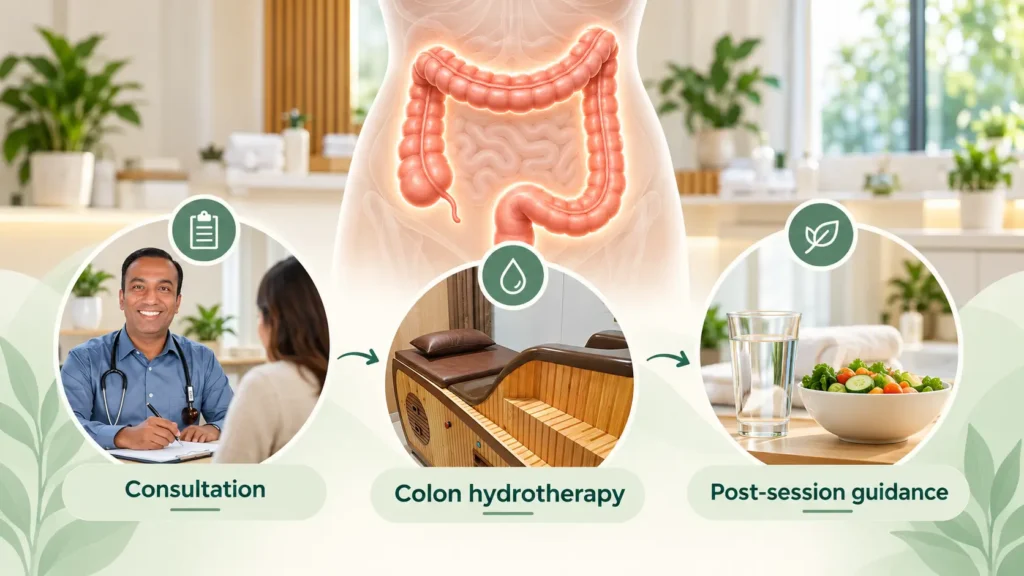
2. Why Was Colon Hydrotherapy Considered?
Colon therapy is a term used for approaches intended to cleanse the large intestine. Colon hydrotherapy involves introducing water into the colon using specialised equipment.
In this patient’s reported journey, colon hydrotherapy was selected as part of an approach to address her concerns about constipation and digestive discomfort.
The procedure may produce temporary bowel evacuation, but evidence supporting colon hydrotherapy for general detoxification, persistent bloating or long-term digestive health remains limited. It should not be presented as a proven treatment for IBS, acidity or impaired nutrient absorption.
Understanding Oil Dosing
The original case study also describes oil dosing alongside colon hydrotherapy. Before publishing specific claims about this approach, the clinic should verify the oil formulation, method of administration and clinical rationale.
Claims that oil dosing restores gut bacteria, repairs the gut lining or guarantees long-term digestive recovery should not be made without appropriate evidence.
3. Step-by-Step Therapy Experience
The original case notes describe the following treatment journey.
Step 1: Initial Consultation
The patient consulted Dr. Abhishek Jain, identified in the original content as a BNYS-qualified physician with more than 25 years of experience. Her digestive symptoms and relevant health concerns were discussed.
The diagnosis of severe constipation and IBS tendencies mentioned in the original article should be confirmed against the clinical records before publication.
Step 2: Pre-Therapy Preparation
The original notes describe checking vital signs, explaining the procedure and arranging assistance from Dr. Arvashi for the patient’s comfort and privacy.
Medical history, suitability, potential risks and informed consent should be addressed before proceeding.
Step 3: Colon Hydrotherapy Session
The procedure involved the introduction of warm, filtered water using specialised equipment. The original case notes describe the gradual release of waste and gas during the session.
Changes in the appearance of discharged water do not establish that toxins have been removed or that digestive health has been restored.
Step 4: Oil Dosing
Oil dosing was described as a separate part of the treatment process. The exact formulation and administration details should be confirmed before making claims about its effects.
Step 5: Post-Session Guidance
The original case notes mention advice about hydration, a light, fibre-rich diet and avoiding processed foods for 48 hours.
Dietary recommendations should be personalised to the individual’s health needs and discussed with an appropriate healthcare professional.
4. What Improvements Did the Patient Report?
According to the original case study, the patient reported several changes during her treatment journey.
Reported immediate changes included:
- Reduced bloating from the first day
- A feeling of lightness and improved energy
- Relief from constipation
The original article also describes improvements after regular sessions, including better appetite, less heaviness after meals and fewer acidity episodes.
These observations should be presented as patient-reported experiences rather than proven effects of colon therapy. The available case description does not establish a clearly documented follow-up period or objective measurements that demonstrate how long the changes lasted.
The original article also mentions blood pressure and blood sugar improvements alongside dietary changes. These outcomes should not be attributed to colon hydrotherapy without appropriate clinical documentation.
A single case study cannot establish treatment effectiveness or predict the results another patient may experience.
5. Important Things to Know Before Considering Colon Therapy
Colon hydrotherapy is not suitable for everyone. It may carry risks, including abdominal discomfort, dehydration, infection and, rarely, serious complications.
People with certain digestive, kidney or heart conditions may face additional risks. Anyone considering the procedure should discuss their medical history, medications and symptoms with a qualified healthcare professional first.
Persistent bloating, constipation or acidity deserves proper assessment rather than an assumption that the colon needs cleansing. Severe abdominal pain, vomiting, fever or rectal bleeding requires prompt medical evaluation.
For further wellness information, read about IV Nutrition Drips for Inflammation and Omega-3. This is a separate service topic and should not be considered a treatment for bloating or constipation.
6. Colon Therapy at Salubrity, Gurgaon
At Salubrity Integrative Wellness Clinic, Gurugram, individuals can explore available wellness services and discuss their concerns before deciding on a procedure.
If you are researching colon therapy in Gurgaon or elsewhere in Delhi NCR, ask about the treatment process, potential risks, hygiene practices, suitability and realistic expectations. An individual consultation can help you make a more informed decision.
You can also learn about At-Home IV Drip Therapy in Gurgaon to understand another service offered by the clinic. IV drip therapy and colon hydrotherapy are different services and should not be presented as interchangeable treatments.
Visit Salubrity Integrative Wellness Clinic for more information about the clinic and its wellness services.
Frequently Asked Questions About Colon Therapy
1. Can colon therapy help with persistent bloating?
Persistent bloating can have several causes. Evidence supporting colon hydrotherapy as a treatment for chronic bloating is limited. A healthcare professional can help identify possible causes and discuss appropriate options.
2. Is colon therapy painful?
Experiences vary. Some people may experience cramping, discomfort or bloating during or after the procedure. Discuss possible side effects and safety precautions before deciding whether to proceed.
3. How many colon therapy sessions are needed?
There is no universally established number of sessions for treating general bloating or constipation. The original case study does not establish an evidence-based schedule for repeated sessions. Avoid assuming that everyone needs multiple treatments or regular cleansing.
Conclusion: Exploring Colon Therapy in Delhi NCR
Persistent bloating, constipation and digestive discomfort can affect everyday life. Understanding the possible causes of these symptoms is an important first step towards making an informed healthcare decision.
This case study describes one patient’s reported experience with colon hydrotherapy at Salubrity Integrative Wellness Clinic, Gurugram. Her reported changes should be understood as an individual experience, not a guarantee of lasting relief or proof that the procedure treats the underlying cause of bloating.
If you are considering colon therapy in Gurgaon or Delhi NCR, contact Salubrity to ask about the procedure, its limitations and whether an individual assessment is appropriate for you.
Call Salubrity: +91 60001 56001
Want to Know More About Colon Therapy?
Contact Salubrity to learn about the procedure and discuss whether it may be suitable for you.
Choose your next step with accurate information, realistic expectations and appropriate professional guidance.