
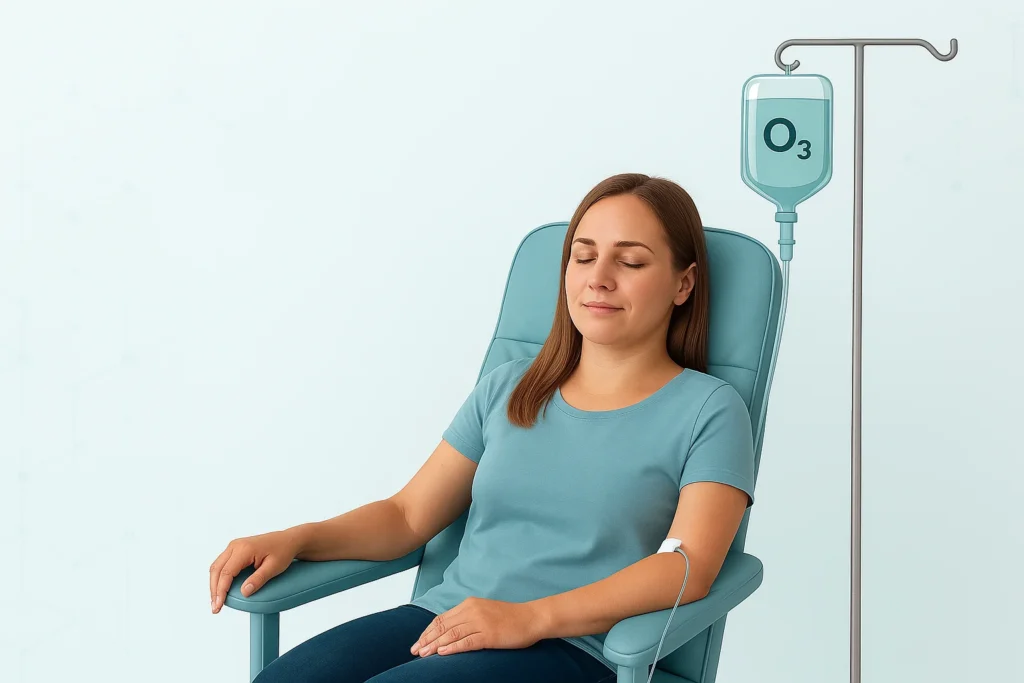
Medical ozone therapy is an approach that has been investigated for certain clinical applications. Interest in this therapy has grown as people look for information about different healthcare and wellness options. However, understanding its potential uses, limitations and safety is essential before considering any procedure.
At Salubrity Integrative Wellness Clinic in Gurgaon, individuals can seek information about wellness services and discuss their health-related questions with an appropriately qualified healthcare professional.
This article explains what medical ozone therapy involves, what scientific research currently tells us, and which safety considerations deserve attention.

What Is Medical Ozone Therapy?
Medical ozone therapy refers to the use of ozone (O₃), a reactive gas containing three oxygen atoms. It is different from the oxygen (O₂) that humans breathe.
Ozone has been investigated in several areas of healthcare, including certain topical and local applications. However, evidence supporting its use varies by condition, procedure and patient population. It should not be assumed to be an established treatment for every health concern.
Ozone gas must not be inhaled as a treatment. Inhalation can irritate and damage the respiratory system.
Different ozone-based procedures may involve different delivery methods. These can include selected topical applications and other techniques investigated in clinical research. Their risks, intended uses and evidence bases are not interchangeable.
Before considering any procedure, it is important to understand the specific method being proposed, its intended purpose and whether reliable clinical evidence supports its use.
It’s important to note that ozone is not inhaled; instead, it is administered using medically approved methods such as:
- IV Ozone Therapy (Autohemotherapy)
- Rectal or vaginal insufflation
- Topical ozone applications
- Ozone bagging or cupping for skin and limb conditions
At Salubrity, we ensure ozone is freshly generated using medical-grade oxygen and applied based on your individual needs and medical history.
How Does Ozone Therapy Work?
Ozone is highly reactive and can interact with biological molecules. Researchers have investigated how these reactions may influence oxidative processes and cellular signalling.
However, identifying a biological effect does not necessarily mean that a therapy provides a meaningful health benefit in people. Clinical outcomes must be established through appropriate research.
1. Oxidative Stress and Antioxidant Responses
Some research has examined how ozone exposure may influence oxidative stress and the body’s antioxidant response under particular experimental conditions.
The effects depend on several factors, including the concentration, exposure, delivery method and biological context. It is not established that ozone therapy consistently improves cellular health or overall wellness in humans.
2. Immune Function and Inflammatory Responses
Ozone therapy has been investigated for its possible effects on immune signalling and inflammatory processes.
However, there is insufficient high-quality evidence to conclude that it reliably boosts immunity or treats autoimmune diseases such as lupus and rheumatoid arthritis.
People living with autoimmune or chronic inflammatory conditions should discuss complementary therapies with their treating specialist and should not replace established treatment without appropriate medical advice.
3. Antimicrobial Properties
Ozone has antimicrobial activity under specific conditions, which has led to research into certain local applications.
However, laboratory findings do not establish that ozone therapy can safely eliminate infections inside the human body. Its use should not replace appropriate diagnosis, prescribed antimicrobial treatment or established infection-control measures.
4. Pain and Tissue-Related Research
Researchers have investigated selected ozone-based procedures for musculoskeletal pain and certain wound-care applications.
The findings vary by condition, procedure and study quality. Research on one particular application cannot automatically be used to support other methods or unrelated medical conditions.
Further well-designed clinical studies are needed to establish the effectiveness and safety of many proposed applications.
Potential Applications of Medical Ozone Therapy
Medical ozone therapy has been studied in different clinical settings. The level of evidence varies, and some proposed uses remain experimental or insufficiently supported.
Areas investigated in research include:
- Selected dental applications: Certain ozone-based techniques have been studied in specific oral health settings.
- Musculoskeletal conditions: Some studies have evaluated particular ozone procedures for joint and other musculoskeletal complaints.
- Wound care: Research has examined selected topical applications, including their possible role alongside standard wound management.
- Other medical conditions: Additional applications have been explored, but stronger clinical evidence may be needed before reliable conclusions can be drawn.
These research areas should not be interpreted as proof that ozone therapy treats all the conditions mentioned in promotional material.
In particular, claims that ozone therapy cures chronic infections, treats autoimmune diseases, reverses long COVID, prevents chronic illness or provides anti-ageing benefits require robust, condition-specific clinical evidence.
Patients should discuss the quality of evidence, available alternatives and potential risks with an appropriately qualified healthcare professional.
For a better understanding of the available clinical evidence, read this 2026 umbrella review of the effectiveness and safety of ozone therapy in humans.
Is Medical Ozone Therapy Safe?
Safety depends on the procedure, the method of administration, the individual’s medical circumstances and the available evidence.
Ozone is a reactive substance, and inappropriate exposure or administration can cause harm. A procedure should not be considered safe simply because it is described as natural, controlled or professionally supervised.
Important safety considerations include:
- Ozone gas should never be inhaled as a treatment.
- Different administration methods have different risks and should not be treated as interchangeable.
- The potential for adverse effects and complications should be explained before a procedure.
- Existing medical conditions, current medicines and previous treatments should be reviewed.
- Appropriate diagnosis and established medical treatment should not be delayed.
- The evidence supporting the proposed use should be discussed openly.
The effectiveness and long-term safety of several ozone therapy applications remain uncertain. Anyone considering a procedure should be given balanced information about potential benefits, limitations, risks and alternatives before making a decision.
Who Should Seek Medical Advice Before Considering Ozone Therapy?
Anyone considering medical ozone therapy should discuss their medical history and intended treatment goals with an appropriately qualified healthcare professional.
A medical assessment is particularly important for people who:
- Have a diagnosed autoimmune or chronic inflammatory condition.
- Are receiving treatment for an infection or another serious illness.
- Have multiple medical conditions or take prescription medicines.
- Are pregnant or breastfeeding.
- Have experienced complications from a previous medical procedure.
This list is not exhaustive. Suitability depends on the specific procedure and the individual’s circumstances.
Do not stop prescribed medicines or postpone necessary medical care in favour of ozone therapy.
What Should You Ask Before Considering Medical Ozone Therapy in Gurgaon?
If you are researching medical ozone therapy in Gurgaon, asking clear questions can help you make a more informed decision.
Consider discussing the following with a qualified healthcare professional:
- What is the intended purpose of the proposed procedure?
- What high-quality clinical evidence supports its use for my particular concern?
- What are the possible risks, side effects and complications?
- Are there established treatment options or alternatives?
- What qualifications and relevant experience does the practitioner have?
- What monitoring or follow-up may be necessary?
- What should I do if symptoms persist or worsen?
A responsible discussion should distinguish established medical evidence from preliminary findings and claims that have not been adequately demonstrated.
Exploring Wellness Information at Salubrity Integrative Wellness Clinic
Salubrity Integrative Wellness Clinic is located in Gurgaon and provides information about wellness services.
Individuals exploring different options can also read about IV Nutrition Drips and Far Infrared Sauna Therapy.
These services involve different approaches and should not be presented as interchangeable treatments or as guaranteed methods of detoxification, disease prevention or recovery.
The suitability of any healthcare intervention depends on the individual’s circumstances and the advice of an appropriately qualified professional.
Frequently Asked Questions
1. What is medical ozone therapy?
Medical ozone therapy refers to the use of ozone in selected clinical applications. Its proposed uses, available evidence and risks vary according to the procedure and the condition being considered.
2. Is medical ozone therapy scientifically proven?
Scientific evidence varies across applications. Some have been investigated in clinical studies, but many proposed benefits remain uncertain. The evidence for each procedure should be evaluated separately.
3. Can ozone therapy treat autoimmune diseases?
There is insufficient high-quality evidence to establish ozone therapy as an effective treatment for autoimmune diseases such as lupus or rheumatoid arthritis. People with these conditions should consult their treating specialist before considering complementary interventions.
4. Can ozone therapy detoxify the body?
Claims that ozone therapy detoxifies the liver or removes unspecified toxins from the body have not been established by robust clinical evidence. Treatment decisions should be based on reliable evidence and appropriate medical advice.
5. Is it safe to inhale ozone?
No. Ozone gas should not be inhaled as a treatment because inhalation can irritate and damage the respiratory system.
6. How can I learn more about medical ozone therapy in Gurgaon?
You can contact Salubrity Integrative Wellness Clinic in Gurugram to ask about its services and arrange a discussion with an appropriately qualified healthcare professional. Ask about the available evidence, potential risks and alternative options before considering any procedure.
Conclusion
Medical ozone therapy has been investigated for a range of clinical applications, but the available evidence does not establish every proposed benefit. Understanding the limitations of current research, potential risks and alternative options is an important part of making informed healthcare decisions.
If you are researching medical ozone therapy in Gurgaon, seek reliable information and discuss your individual circumstances with an appropriately qualified healthcare professional before considering a procedure.
Medical disclaimer: This article is intended for general educational purposes only. It does not provide individual medical advice, diagnosis or treatment recommendations. Evidence and safety considerations vary by application. Consult an appropriately qualified healthcare professional about your individual healthcare needs.